Reader story · Midlife health
"I Stood at the Fridge at Midnight Again." What Donna Learned About the Hunger That Wasn't Hers
It wasn't willpower. For years her body was stuck in stress mode, and the dieting was making it louder. What Donna, 58, learned, and the one-capsule morning routine she uses now.
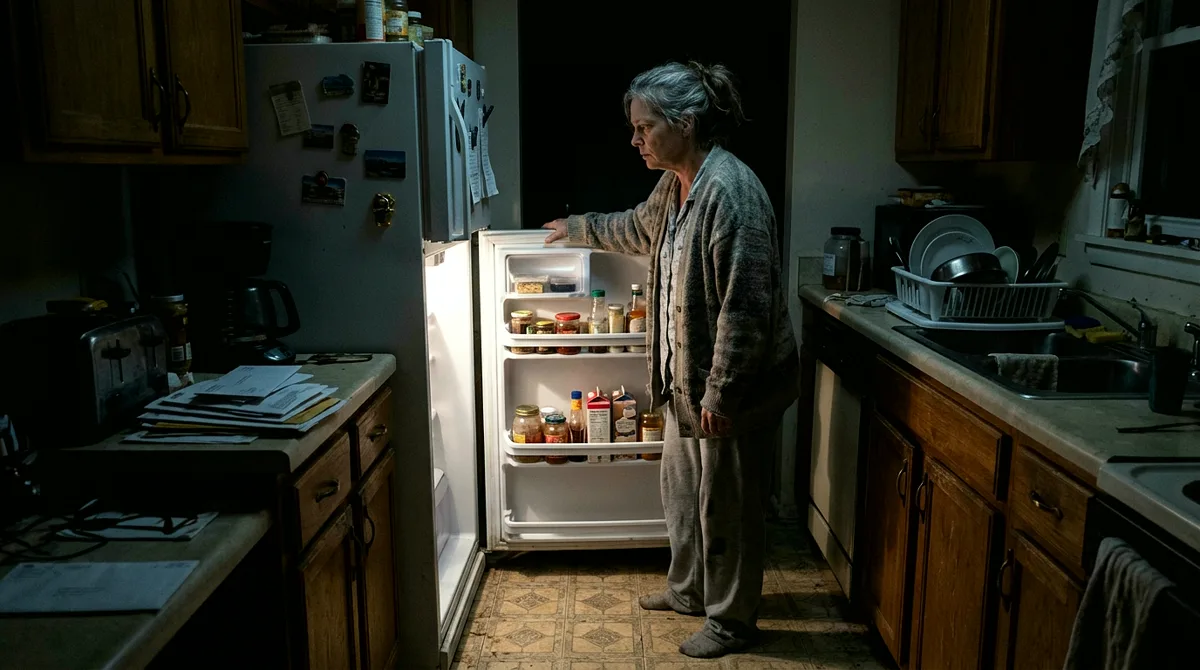
Donna is 58, a retired school secretary from Ohio. For most of her adult life she has been on a diet. "Weight Watchers, keto, the 1,200-calorie plan on the fridge, the 5 a.m. walks," she says. "I could tell you the calories in anything."
Two years ago her doctor put her on one of the weekly weight-loss shots. It worked. She lost 30 pounds and, for the first time in decades, the constant chatter about food went quiet. Then her insurance stopped covering it. At over $1,000 a month, she stopped.
"Within a year it was all back, and then some," she says. "And the noise came back with it. Thinking about lunch while I'm eating breakfast. Standing at the fridge at midnight. I felt like a failure all over again."
She is far from alone
Donna's story is common. In a large study of more than 125,000 American adults who started these medications, about two in three of those without diabetes had stopped within a year, often because of cost or side effects. In the STEP 1 trial extension, people who stopped regained about two-thirds of the weight they had lost within a year.
"Nobody tells you what happens after," Donna says. "You just feel like it was your fault."
The hormone nobody mentioned
What finally made sense to Donna was something her niece, a nurse, sent her: an explanation about cortisol, the body's main stress hormone.
Cortisol is supposed to rise when you're under pressure and then come back down. But with years of stress, poor sleep and constant dieting, many women live with it switched on. In a well-known lab study, women who released more cortisol under stress went on to eat more afterward, especially sweet food.
And here is the part that stung: a study of 121 women found that strict 1,200-calorie dieting raised cortisol. "So all those years of eating less were turning the volume up," Donna says. "That changed how I saw myself."
Researchers also know that a calm, well-fed body sends 'I'm full' signals from the gut after a meal, including GLP-1, the same signal the shots copy. A body stuck in stress mode has a harder time hearing them.

What Donna looked for
Donna didn't want another crash diet or another prescription. She wanted something simple that worked on the stress side of the problem and the fullness side at the same time. Her niece helped her look at the ingredients with research behind them. Here is what they found, including what the studies do not show.
1. Ceremonial matcha
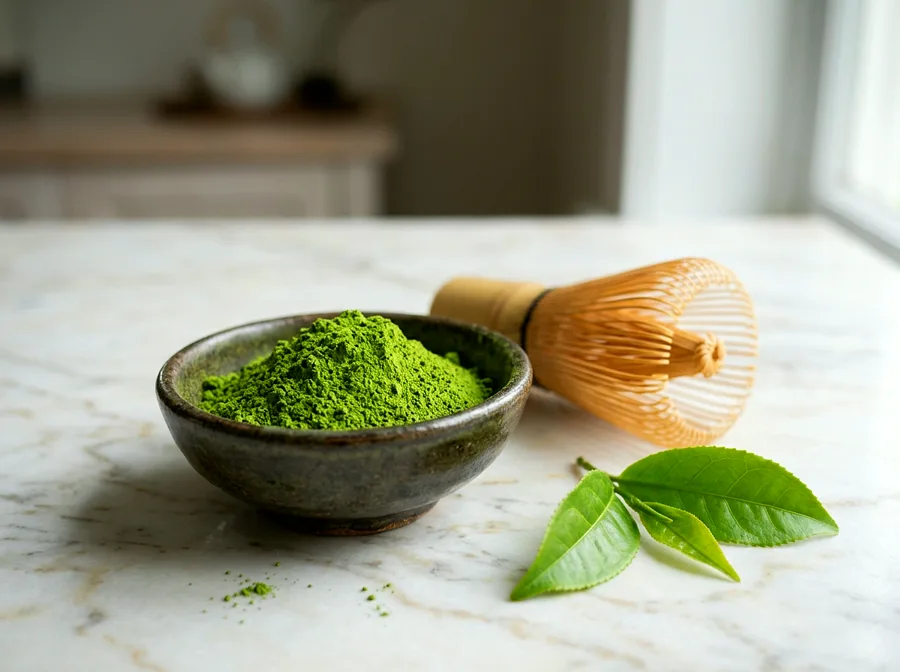
Matcha is a shade-grown green tea rich in a compound called EGCG. In a 2014 laboratory study published in PLoS One, EGCG blocked an enzyme the body uses to make active cortisol inside tissues. That was a lab study, not a study in people, so it shows a mechanism, not a result. Matcha also contains some natural caffeine, which is one reason it's best taken in the morning.
2. Turmeric, cinnamon, ginger and probiotics
Turmeric is the yellow root behind curcumin, widely studied for how it supports a healthy inflammation response. Cinnamon and ginger are kitchen classics used for generations for digestion and steady appetite. And a probiotic blend supports the gut, where many of the body's fullness signals begin. None of these is a miracle on its own, and none replaces a doctor's care.
Donna's one-capsule morning routine
Donna didn't want to buy five bottles. What she found was LeafTide, a once-a-day capsule that combines ceremonial matcha, turmeric, cinnamon, ginger and a probiotic blend.
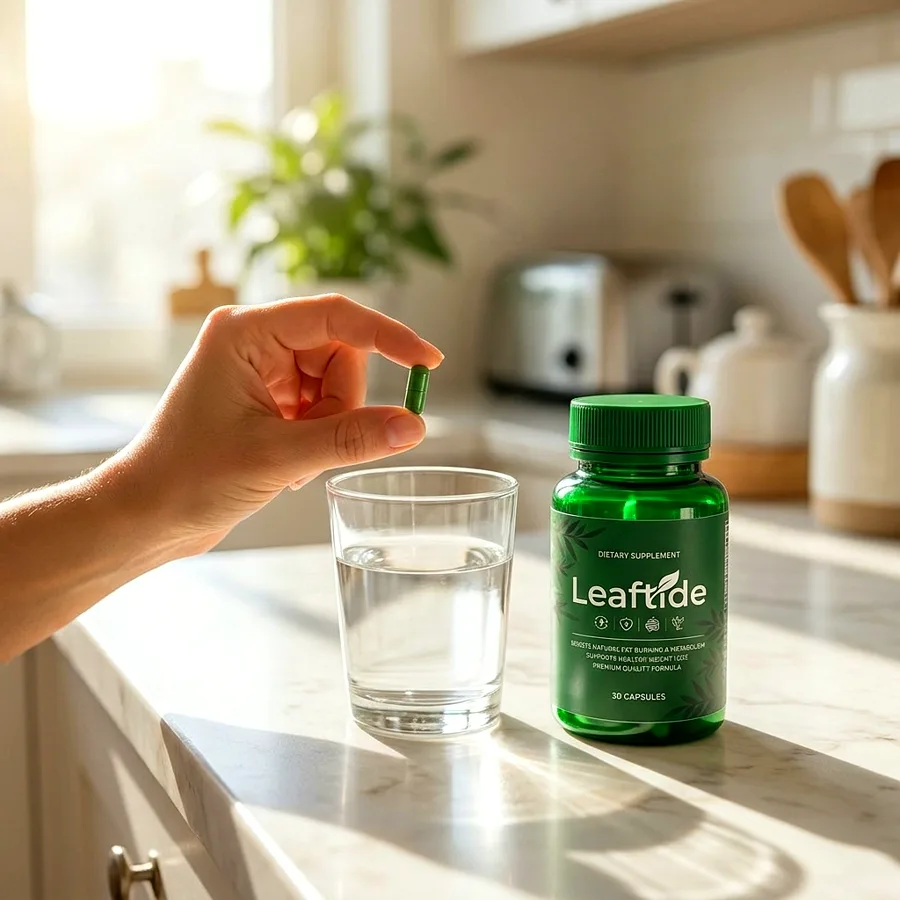
"One capsule with my water before I make coffee," she says. "That's it. No shakes, no measuring."
She is careful about what she says next. "I'm not going to tell you I dropped 30 pounds in a month. I didn't. What I noticed first was quieter. Around the second week I realized I'd walked past the cookies at three o'clock and hadn't argued with myself about it. The fridge at midnight got boring. The scale started moving after that, slowly. That's the honest version."
Is it right for you? Read this first
LeafTide is a dietary supplement. It is not a weight-loss drug, it does not replace any medication, and it is not a treatment for any disease. If you take prescription medication, especially for diabetes, blood pressure or a blood thinner, or if you are pregnant or nursing, talk to your doctor before starting any supplement.
Because matcha contains some natural caffeine, people who are very sensitive to caffeine should check with their doctor too.
And give it time. Nobody can honestly promise a date, and results vary. That is why most people choose the 6-bottle package and why every order comes with a 90-day money-back guarantee.
The formula Donna uses: LeafTide

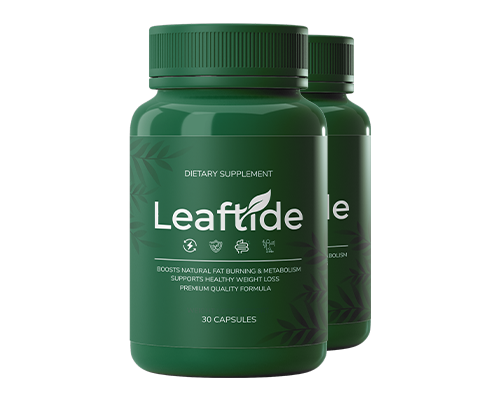
LeafTide is a dietary supplement that supports a healthy stress response, fullness between meals and fewer cravings as part of a healthy routine.*
- Ceremonial matcha (EGCG)
- Turmeric
- Cinnamon and ginger
- Probiotic blend
- One capsule a day, 30 capsules per bottle
See how the 1-capsule routine works →Official LeafTide page · 90-day money-back guarantee
Where to get LeafTide
LeafTide is sold only through its official checkout, not in stores or on Amazon. Most people choose 6 bottles because it is the lowest price per bottle and covers six months.
6 bottles$119.93 total$19.99 per bottle · free US shipping
Choose 6 bottles
 4 bottles$109.96 total$27.49 per bottle · free US shipping
Choose 4 bottles
 2 bottles$89.50 total$44.75 per bottle · plus $19.99 shipping
Choose 2 bottles
Your order is a subscription: your package refills and is billed every 30 days at the same price until you cancel; cancel anytime by e-mail. Express shipping and the Wellness Club app (7 days free, then $77 every 28 days) are optional at checkout: untick them to pay only your package price.
90-day money-back guarantee
If LeafTide is not right for you, e-mail [email protected] within 90 days of your purchase with your order number and ask for a refund.
Questions readers ask
How do I take it?
One capsule a day, in the morning, with a glass of water.
Is this a weight-loss drug or a replacement for my medication?
No. LeafTide is a dietary supplement. It does not diagnose, treat, cure or prevent any disease and does not replace any medication. Talk to your doctor before starting if you take prescription medication.
Does it have caffeine?
Matcha naturally contains some caffeine. It has no harsh stimulants. If you are very sensitive to caffeine, ask your doctor first.
How soon will I notice something?
Nobody can honestly promise a date and results vary. The 90-day guarantee gives you time to decide.
- Tomiyama AJ et al. Low calorie dieting increases cortisol. Psychosomatic Medicine, 2010.
- Epel E et al. Stress may add bite to appetite in women: a laboratory study of stress-induced cortisol and eating behavior. Psychoneuroendocrinology, 2001.
- Rodriguez PJ et al. Discontinuation and reinitiation of dual-labeled GLP-1 receptor agonists among US adults with overweight or obesity. JAMA Network Open, 2025.
- Wilding JPH et al. Weight regain and cardiometabolic effects after treatment withdrawal: the STEP 1 trial extension. Diabetes, Obesity and Metabolism, 2022.
- Hintzpeter J et al. Green tea and one of its constituents, epigallocatechine-3-gallate, are potent inhibitors of human 11β-hydroxysteroid dehydrogenase type 1. PLoS One, 2014.